
How Do You Combine Cable, Wood, Aluminum, and Glass in a Mixed-Material Deck Railing?
Combining materials in a deck railing is straightforward when you match the structural post type to the right infill hardware and maintain a consistent finish language across all components. The most common combinations pair wood or composite posts with stainless steel cable infill, or aluminum posts with cable or glass infill. What drives compatibility is whether the post material can handle the tension load and whether the hardware is designed to work with that post type.
Mixed-material railing has become a defining trend in contemporary deck design for practical reasons beyond aesthetics. Pairing a lower-cost post material with high-quality cable or glass infill can reduce total project cost while still producing a premium look, and it allows the railing to respond to the home’s architectural character more precisely than a single-material system.
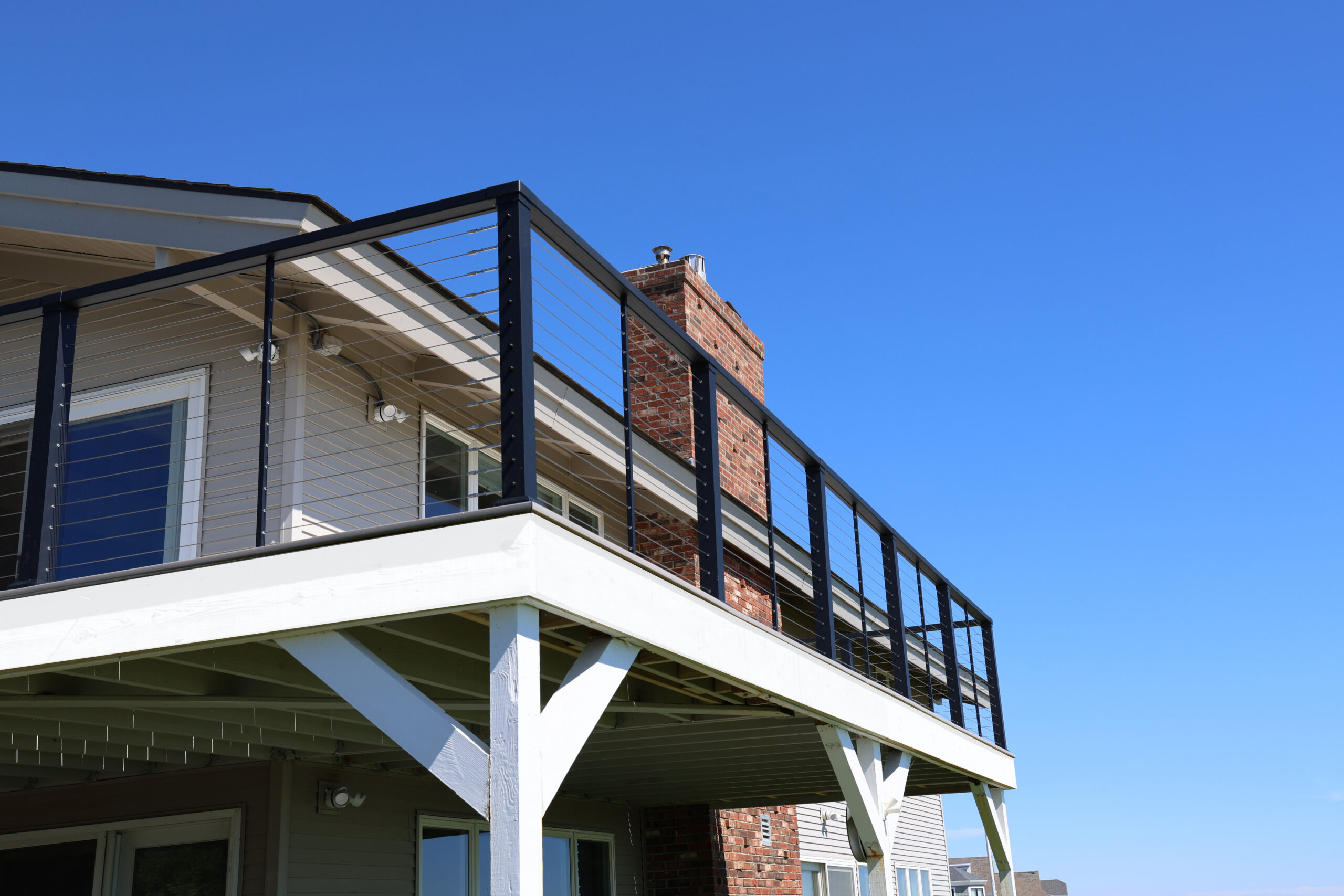
What Are the Most Popular Mixed-Material Railing Combinations?
Wood posts with stainless steel cable infill is the most widely used mixed-material combination in residential deck railing. It balances natural warmth from the wood with the clean, open sightlines of horizontal cable, and it is accessible to a wide range of budgets because the wood post work uses standard carpentry skills while the cable hardware does the technical work. Aluminum posts with cable or glass infill is the second most common combination, preferred on projects where low maintenance is the overriding concern, since aluminum posts require no sealing, staining, or structural replacement over a normal service period.
The choice between these combinations typically comes down to the home’s exterior character, the budget allocated to the railing, and how much ongoing maintenance the homeowner is prepared to do. A cedar post system will need periodic staining or sealing to maintain its appearance; an aluminum post system will not.
How Do You Pair Wood Posts with Stainless Steel Cable Infill?
Wood posts with stainless steel cable infill work well together because standard cable railing hardware, including the through-post fittings, surface-mount tensioners, and eye bolts used in component-based systems, is designed to mount into or through structural wood members. The wood post provides the structural support, the cable hardware anchors into the wood, and the stainless cable runs between them.
RailEasy™ cable railing hardware from Atlantis Rail is widely used in wood-post applications because its mechanical tensioning system can be integrated with customer-supplied structural posts of almost any species or profile, giving the homeowner or contractor flexibility in post material choice without compromising the cable tensioning performance. The visual result is a system that reads as intentionally designed rather than assembled from mismatched components, particularly when post profiles are kept slender and top rail material is chosen to complement the post wood.
Can You Combine Aluminum Posts with Cable or Glass Infill?
Aluminum posts are designed to accept cable infill in many product families, with pre-drilled cable holes or surface-mount hardware brackets built into the post profile. This makes aluminum-post cable railing one of the more straightforward mixed-material combinations from an installation standpoint, since the post and cable hardware are often designed as a system from the start.
For glass infill, aluminum posts or aluminum-framed glass systems pair naturally because aluminum can be extruded into the channel profiles that hold glass panels, and powder-coated aluminum frames can be color-matched to other hardware elements on the deck. The result is a clean, contemporary look that is popular on urban rooftops, high-end residential projects, and hospitality settings where a refined, low-maintenance finish is the goal.
How Do You Add a Glass Panel Section to a Cable Railing Run?
Adding a glass panel section to an otherwise cable railing run requires planning the transition point carefully. The post at the junction between cable and glass sections must accommodate both the cable hardware on one face and the glass panel frame or clamp on the other. In some cases, a wider post profile is needed at transition points to provide adequate bearing surface for both attachment types.
Glass panel sections also require level, plumb installation to a higher tolerance than cable sections, since any post misalignment is visible through the transparent panel in a way that cable deflection is not. Planning the glass section early in the layout phase, before posts are set, gives you the best opportunity to ensure alignment is right before fabrication or ordering.
What Drives Compatibility Between Post Types and Cable Railing Hardware?
The key compatibility factors are post wall thickness (for through-post fittings), post face dimension (for surface-mount hardware), cable diameter relative to fitting specification, and the structural integrity of the post material at the hardware attachment point. Hardware designed for wood posts may not transfer correctly to hollow aluminum posts without a backing plate or insert, and vice versa.
HandiSwage™ cable railing system components from Atlantis Rail can integrate with a range of post materials and sizes, giving specifiers flexibility in matching hardware to posts rather than requiring a proprietary post system. Confirming hardware-to-post compatibility before ordering materials is the most important planning step in any mixed-material project.
How Do You Keep a Mixed-Material Railing Looking Cohesive?
Cohesion in a mixed-material railing comes from maintaining consistency in two areas: finish tone and hardware profile. If your wood posts are a warm medium tone, choosing a brushed silver stainless steel cable and hardware creates a contrast that can feel intentional and design-forward. If the goal is a more unified look, powder-coated aluminum posts in a color that references the cable or glass finish brings the materials into closer visual alignment.
Top rail material is one of the most powerful cohesion tools. A continuous top rail in a single material, whether wood, composite, or aluminum, ties the different post and infill types together along the length of the railing. Even a simple round or rectangular wood cap rail in a complementary tone can unify an otherwise varied material palette and give the finished railing a purposeful, designed appearance.
Find the Right Hardware for Your Mixed-Material Railing
Atlantis Rail Systems offers cable railing hardware that integrates with customer-supplied post materials, giving you the flexibility to design the mixed-material combination that fits your project’s style and budget. Explore Atlantis Rail railing systems to see system families and components, or request a quote for personalized guidance on the right hardware for your specific post and infill combination.
Atlantis Rail Systems: The Leader in Cable Railing Systems
To learn more about beautiful and practical cable railing systems for your deck, stairs, and balconies, browse the Atlantis Rail Systems website. This Plymouth, MA-based company offers many unique, easy-to-install configurations complete with all necessary hardware to ensure a safe and code-compliant railing system.
For more information on planning cable railings for decks, contact the railing experts at Atlantis Rail Systems at 1-800-541-6829 or by completing the Contact Us Form.