
Aluminum vs. Stainless Steel Cable Railing: Which Material Should You Choose?
Aluminum cable railing costs less upfront and weighs less than stainless steel, making it a practical choice for budget-conscious projects and lighter structural frames. Stainless steel, particularly the 316 marine grade, offers superior corrosion resistance and tensile strength, making it better suited to coastal, high-humidity, or long-service-life applications.
Both materials produce a clean, modern railing with open sightlines, and both are widely used in residential and commercial cable railing. The difference lies in how each performs over time under real outdoor conditions and what your project actually requires in terms of budget, climate, and appearance.
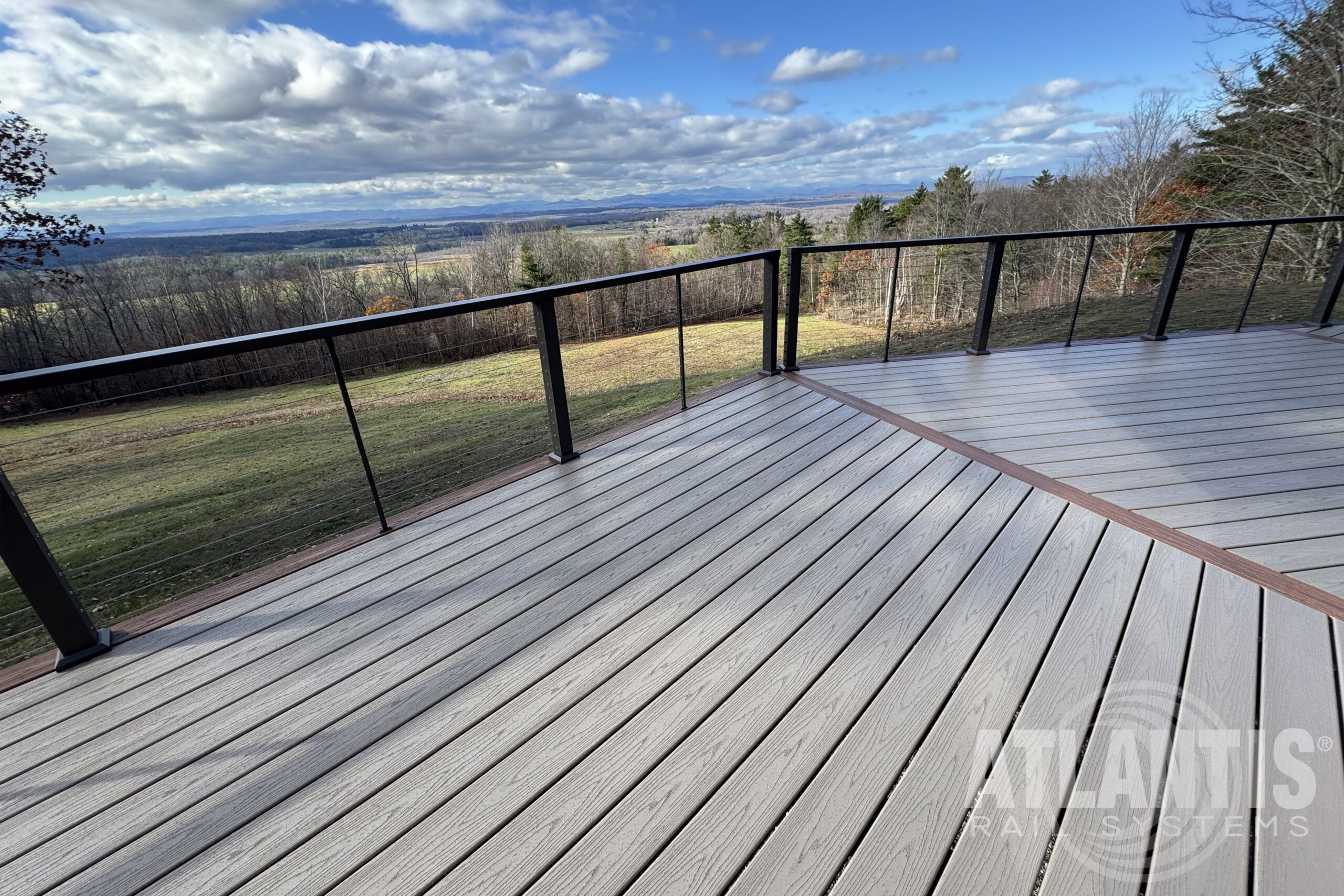
How Do Aluminum and Stainless Steel Compare in Cost?
Aluminum cable railing systems typically cost less per linear foot than stainless steel, primarily because aluminum is less expensive to source and easier to extrude into post and rail profiles. For budget-sensitive projects or longer runs, the cost difference can be meaningful. Stainless steel commands a higher price in exchange for longer service life and stronger corrosion resistance.
The cost gap between aluminum and stainless steel narrows when you factor in total cost of ownership over time. Stainless steel hardware, particularly 316 grade, rarely needs replacement in outdoor settings, while aluminum components in harsh coastal environments may show surface degradation sooner and require earlier attention. For a project where the railing will be in place for decades, stainless steel often delivers a lower cost over the full service period even if the upfront investment is higher. The NOVA aluminum cable railing system from Atlantis Rail offers a well-engineered aluminum option for projects where budget and weight are the primary drivers.
Which Material Holds Up Better in a Coastal or Marine Environment?
316 stainless steel holds up significantly better than aluminum in coastal or marine environments. Its molybdenum content gives it strong resistance to salt-air corrosion and chloride exposure that would degrade less protected materials. Aluminum with a quality powder-coat finish performs adequately in moderate coastal conditions but is more susceptible to pitting and finish breakdown in direct salt-air environments over time.
For any installation within a few miles of the ocean, on a waterfront property, or in a high-humidity climate that sees consistent moisture and salt exposure, 316 stainless steel is the material of choice. Aluminum is better suited to inland or suburban settings where corrosion from marine sources is not a factor. If your project is in a mild climate well away from salt water, aluminum can serve you well for many years with minimal maintenance.
How Does Weight Affect Railing Installation and Structural Requirements?
Aluminum is significantly lighter than stainless steel, which matters primarily in two situations: rooftop or elevated deck installations where structural load is a design constraint, and projects where installers are working alone or on a long run where carrying heavy posts and hardware adds meaningful labor time. Aluminum posts and top rails are easier to handle during installation without the need for additional support.
Stainless steel’s greater weight is a function of its density and the heavier wall thickness typically used in quality railing posts, which also contributes to its strength and rigidity. For most standard deck applications, the structural load difference between aluminum and stainless steel railing is not a limiting factor. Where it does matter, such as on membrane rooftop decks, a structural engineer should confirm load requirements before specifying either material.
What Are the Maintenance Differences Between the Two Materials?
Both aluminum and stainless steel cable railing require minimal maintenance compared to wood or painted railing, but they have different long-term care profiles. Stainless steel generally needs only periodic cleaning to remove dust, salt film, or surface grime, and the metal itself does not require any coating maintenance. Powder-coated aluminum needs occasional inspection of the finish, since chips or scratches in the powder coat can expose the underlying aluminum to moisture and begin a corrosion process if left unattended.
In practice, most homeowners find both materials easy to live with on a day-to-day basis. The maintenance distinction becomes more relevant in harsh climates where stainless steel’s inherent corrosion resistance outperforms aluminum’s reliance on its surface coating. Explore the full range of stainless steel railing systems from Atlantis Rail to see system options in both standard and marine-grade stainless.
How Does Each Material Perform for Long-Term Value?
For long-term value, 316 stainless steel railing holds its appearance and structural integrity longer than aluminum in most outdoor settings, and it is more likely to outlast the building it is attached to without replacement. Aluminum offers strong value in the short to medium term, particularly on projects with a lower budget or a shorter planning horizon.
A useful way to think about the decision: if your project is inland, the budget is constrained, and a 20 to 30 year service life is acceptable, aluminum cable railing is a sound choice. If your project is coastal, high-end, or intended to be a permanent installation with minimal future intervention, stainless steel, particularly 316 grade, is worth the additional upfront investment.
Which Material Is Right for Your Project?
The right choice depends on your climate, budget, and how long you plan to keep the railing in service. Atlantis Rail Systems offers both aluminum and stainless steel cable railing families so you are not limited to one approach.
Request a railing quote for personalized guidance on which material and system fits your specific project, timeline, and budget.
Atlantis Rail Systems: The Leader in Cable Railing Systems
To learn more about beautiful and practical cable railing systems for your deck, stairs, and balconies, browse the Atlantis Rail Systems website. This Plymouth, MA-based company offers many unique, easy-to-install configurations complete with all necessary hardware to ensure a safe and code-compliant railing system.
For more information on planning cable railings for decks, contact the railing experts at Atlantis Rail Systems at 1-800-541-6829 or by completing the Contact Us Form.