
Are Metal Railing Systems a Sustainable Choice Compared to Wood or Glass?
Metal railing systems, particularly stainless steel and aluminum, offer genuine sustainability advantages over wood and lower-durability alternatives when evaluated on a life-cycle basis. Both metals have service lives measured in decades, require minimal maintenance, and are recyclable at end of life. The sustainability case rests on measurable attributes rather than general environmental claims, and the comparison below explains where each material performs well and where it does not.
Sustainability in building products is a topic that rewards precision. Vague claims about being “green” or “eco-friendly” are easy to make and difficult to verify. A more useful approach is to compare materials on specific, measurable attributes: how long does the product last before it needs to be replaced, how much maintenance does it require over its service life, what happens to the material at end of life, and what is the environmental cost of the finish or coating applied to the base material. That is the framework this article uses.
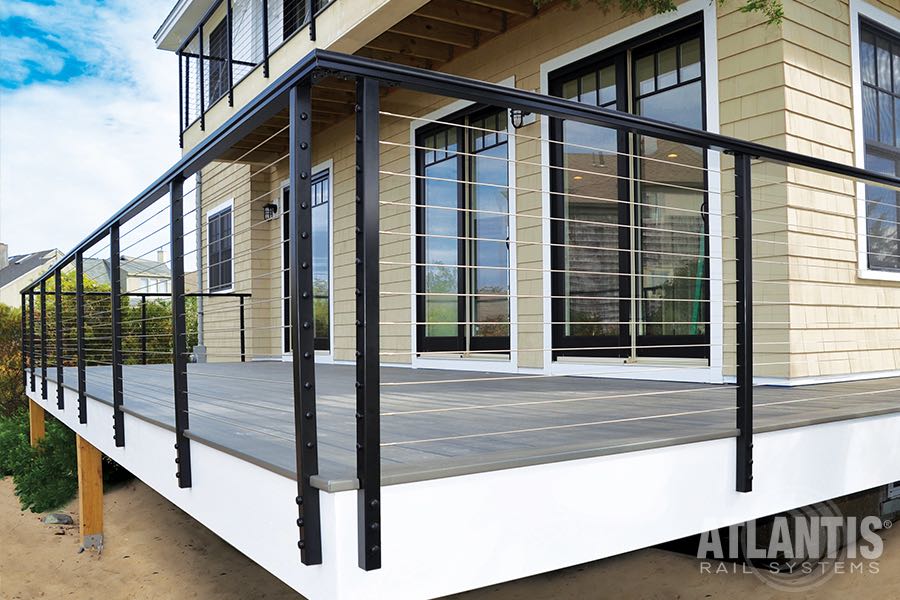
How Does Service Life Affect the Environmental Impact of Railing?
Service life is one of the most important sustainability variables in building products because it determines how often the material must be manufactured, transported, installed, and disposed of over the lifetime of a building. A railing system that lasts 50 years requires one production and installation cycle. A system that lasts 15 years requires three or four, each carrying its own manufacturing and transportation impact.
316 stainless steel cable railing, properly installed with marine-grade hardware, routinely achieves service lives exceeding 50 years in residential and commercial applications, rarely requiring component replacement except for incidental hardware. Wood railing in exterior applications typically requires staining or sealing every one to three years and partial or full replacement every 10 to 20 years depending on climate and exposure. Over a 50-year building lifespan, the cumulative resource and maintenance cost of wood railing far exceeds that of stainless steel, even accounting for the higher initial manufacturing energy cost of metal.
Which Railing Materials Are Most Recyclable at End of Life?
Both stainless steel and aluminum are fully recyclable at end of life, and both are widely recycled in practice. Aluminum has one of the highest recycling rates of any building material in the United States, with approximately 75 percent or more of aluminum produced from recycled content in some product categories. Recycling aluminum requires roughly 95 percent less energy than producing it from raw ore, which is one of the strongest end-of-life sustainability arguments for the material.
Stainless steel is similarly recyclable, with most stainless steel products containing significant recycled content from prior products. The specific recycled content percentage varies by manufacturer and product, and verifiable claims require documentation from the manufacturer’s supply chain, so buyers seeking specific recycled content percentages for LEED or other certification purposes should request mill certificates or product environmental declarations. Stainless steel cable railing systems from Atlantis Rail are built from materials that are fully recyclable at end of life.
How Much Maintenance Does Each Material Require Over a 20-Year Period?
Over a 20-year period, 316 stainless steel cable railing requires only periodic cleaning, no painting, no sealing, and no structural replacement under normal outdoor conditions. Aluminum cable railing requires similarly low maintenance, with occasional inspection of the powder-coat finish and prompt attention to any chips or scratches that could expose the underlying metal.
Wood railing over the same 20-year period typically requires annual or biennial cleaning, staining or sealing every one to three years, and likely at least one partial structural replacement of components that have deteriorated from moisture exposure and UV degradation. The cumulative labor and material cost of that maintenance over 20 years, while variable by climate and care, is substantially higher than for either metal option. Glass railing falls in between: the panels themselves are durable and low-maintenance structurally, but glass surfaces in outdoor settings require regular cleaning to maintain appearance, particularly in urban or coastal environments where dust, bird activity, and pollution accumulate on the surface.
What Is the Environmental Cost of Replacing a Railing System Early?
The environmental cost of replacing a railing system before the building’s own end of life is often larger than the initial manufacturing cost, because it involves the combined impact of manufacturing the replacement system, transporting it to the site, disposing of or recycling the replaced system, and the labor-intensive installation process. This is why service life matters so much in any honest sustainability comparison.
A wood railing replaced twice over a 40-year period carries approximately three times the manufacturing impact of a single stainless steel installation, before factoring in the difference in maintenance inputs. This cumulative accounting does not make metal railing automatically the most sustainable choice in every situation, but it does shift the comparison significantly when the full service period is considered rather than just the upfront purchase.
How Should You Evaluate Finish Coatings in a Sustainability Context?
Not all finish coatings are equivalent in their environmental profile. PVD coatings on stainless steel use a vacuum deposition process with minimal chemical waste and no volatile organic compounds, making them among the more environmentally responsible finish options for metal railing hardware. Powder coating on aluminum is also generally low in VOC emissions and durable in outdoor applications. Aluminum railing systems from Atlantis Rail use powder-coat finishes applied through a controlled process designed for long outdoor service life.
Painted or solvent-based coatings on wood railing carry higher VOC profiles during application and require reapplication regularly over the railing’s service life, compounding their environmental impact over time. When comparing railing materials for a project that weighs environmental performance, the finish coating’s composition and reapplication frequency are relevant attributes to include alongside the base material comparison.
Explore Low-Maintenance, Long-Life Railing Options
For projects where durability, low maintenance, and end-of-life recyclability matter as much as initial cost, Atlantis Rail Systems’ stainless steel and aluminum cable railing families offer a well-documented, long-service-life option. Explore low-maintenance railing options and request a quote to discuss the right system for your project’s performance and sustainability goals.
Atlantis Rail Systems: The Leader in Cable Railing Systems
To learn more about beautiful and practical cable railing systems for your deck, stairs, and balconies, browse the Atlantis Rail Systems website. This Plymouth, MA-based company offers many unique, easy-to-install configurations complete with all necessary hardware to ensure a safe and code-compliant railing system.
For more information on planning cable railings for decks, contact the railing experts at Atlantis Rail Systems at 1-800-541-6829 or by completing the Contact Us Form.